
You may have good skills, valuable experience, and something meaningful to share, but if people cannot understand who you are or what you stand for, your opportunities can remain limited.
That is where personal branding becomes important.

In 2026, your online presence can influence how people discover you, remember you, and decide whether they want to work with you. Whether you are a student, freelancer, creator, professional, or entrepreneur, learning how to communicate your value is becoming just as important as developing the skill itself.
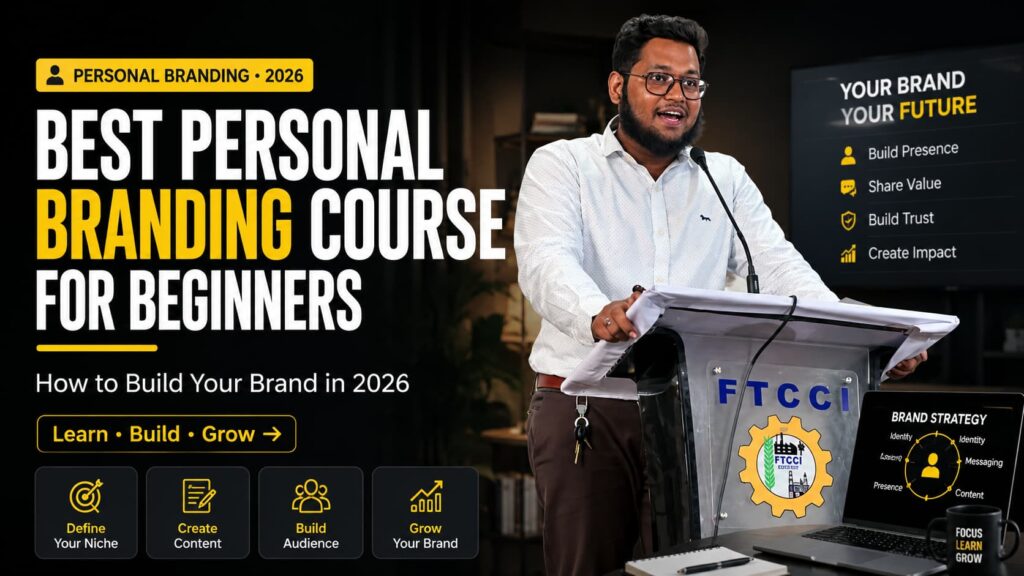
A personal branding course can give you a structured way to understand positioning, content, communication, audience building, and online visibility.
But there is something I have learned personally: personal branding is not about pretending to be successful. It is about documenting your real journey, sharing what you know, learning in public, and consistently creating value.
I am Mohd Abu Sayeed, and this article shares what I have learned while building my own online presence and what you should look for before choosing a personal branding course.
What Is Personal Branding?
Personal branding is the process of intentionally building how people understand and remember you.
Think about it this way.
When someone searches for your name online, what do they find?
Do they see useful content?
Do they understand your skills?
Can they see your projects?
Does your profile communicate what you actually do?
That entire experience contributes to your personal brand.
Personal branding is not limited to having a good photograph or a professional LinkedIn headline. It includes your communication style, expertise, content, projects, values, experience, and the way you interact with your audience.
A good personal branding course should help you understand these elements instead of simply teaching you how to make attractive social media posts.
Your goal should be to build recognition around something genuine.
Why Personal Branding Matters in 2026

The internet has made it easier than ever to showcase your knowledge.
At the same time, it has made competition much stronger.
Thousands of people may have similar qualifications. Hundreds may offer similar freelance services. Many creators may be discussing the same topics.
So what makes someone memorable?
Often, it is the combination of their skills, personality, experience, communication, and consistency.
This is why a personal branding course for beginners can be useful. It can help you understand how to bring different parts of your professional identity together.
For example, a freelancer can use personal branding to demonstrate expertise before speaking with a potential client. A student can document projects and learning experiences. A creator can develop a recognizable content style. A professional can use LinkedIn to communicate expertise and career interests.
Personal branding does not guarantee opportunities. But it can make your expertise easier to discover and understand.

What Does a Personal Branding Course Teach?
A useful personal branding course should go beyond motivational advice.
You should learn practical concepts that you can actually apply.
Finding Your Personal Brand Positioning
The first question should be:
What do you want people to remember you for?
You cannot effectively communicate everything at once.
For example, saying that you are interested in marketing, business, technology, design, content, finance, and ten other areas can make your positioning unclear.
A better approach is to identify your strongest combination of skills and interests.
A good personal branding course should help you identify your positioning and communicate it clearly.
Understanding Your Audience
Your brand is not only about you.
It is also about the people you want to reach.
Ask yourself:
Who am I trying to help?
What problems do they have?
What information are they looking for?
What type of content would actually help them?
When you understand your audience, creating content becomes much easier.
Building a Content Strategy
Content is one of the most visible parts of modern personal branding.
You can create:
- Educational posts
- Personal experiences
- Case studies
- Project breakdowns
- Tutorials
- Videos
- Articles
- Industry opinions
- Learning updates
A strong personal branding course should teach you how to connect your content with your overall positioning instead of posting randomly.
Storytelling and Communication
People remember stories more easily than isolated facts.
You can explain what you learned from a project, how you solved a problem, what mistake you made, or what changed your perspective.
Your personal experiences can become valuable content when you connect them with lessons that help others.
Building Your Online Presence
Your personal brand exists across multiple touchpoints.
That could include:
- YouTube
- Your website
- Portfolio
- Blog
- Professional communities
You do not need to be everywhere.
You need to be where your audience actually spends time.
My Personal Branding Journey

My own journey did not begin with a perfect strategy.
I started by learning, experimenting, creating content, and figuring things out along the way.
I have worked in social media and digital marketing, handled client projects, created content, worked on freelance assignments, built a portfolio, developed websites, and continued learning different areas of the digital industry.
Over time, I understood something important.
Your personal brand grows when your actions start telling a consistent story.
I did not suddenly wake up with a complete personal brand.
I kept learning.
I kept creating.
I started sharing experiences.
I worked on my LinkedIn presence.
I created projects that I could show people.
I built my blogging website.
I documented things I was learning instead of keeping everything to myself.
That process taught me more about personal branding than simply reading definitions ever could.
This is also why I believe a personal branding course should encourage implementation. Learning concepts is useful, but applying them to your own life is where the real learning begins.
Personal Branding on LinkedIn
LinkedIn can be particularly valuable if you are building a professional personal brand.
But simply creating an account is not enough.
Your profile should quickly communicate:
Who are you? What do you do? What can you help with?
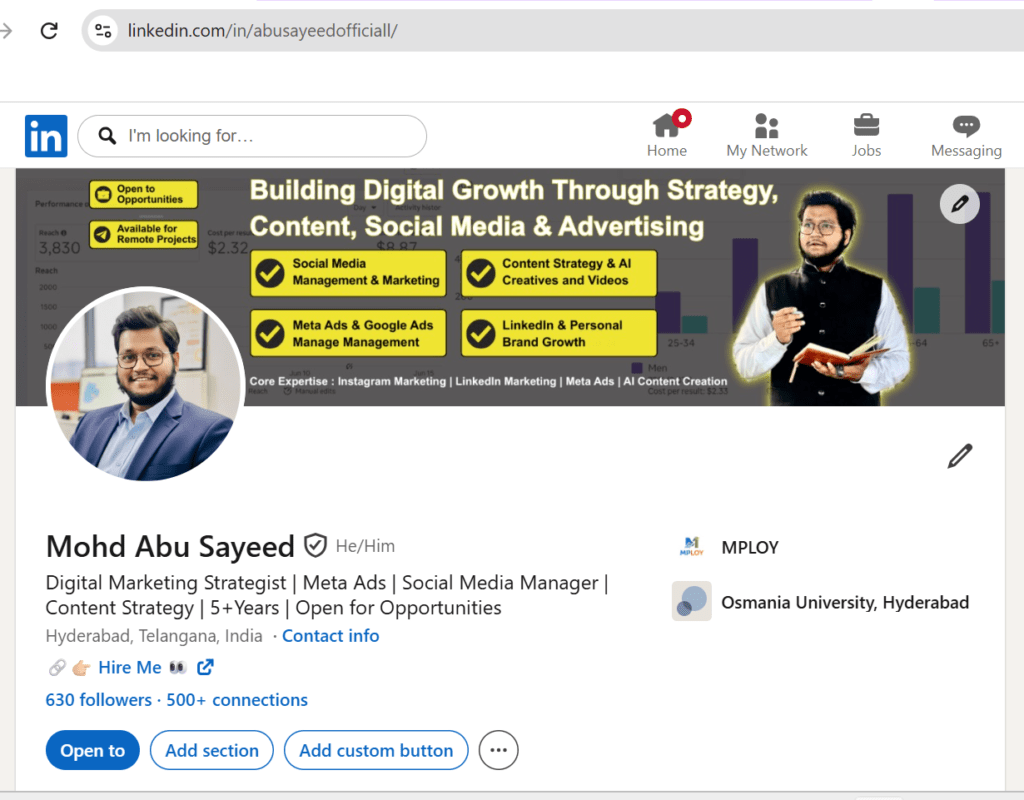
Your content should then support that message.
For example, if you position yourself around digital marketing, your content could include marketing lessons, campaign experiences, project insights, content strategy, SEO learning, social media experiments, and personal career lessons.
Your profile says what you do.
Your content proves that you understand it.
That combination is powerful.
A good personal branding course should therefore include practical guidance around professional profiles, content strategy, communication, and credibility.
Personal Branding for Freelancers and Creators
Personal branding can be especially useful when you sell your skills.
Think about the journey of a potential client.
They may discover your post.
Then they may visit your profile.
Then they may look at your portfolio.
Then they may search your name.
If everything communicates a consistent message, you start building familiarity and trust.
This is where personal branding connects with freelancing.
Your personal brand can help communicate:
Skill → Experience → Proof → Trust → Opportunity
It does not replace the quality of your work.
It helps people understand the quality and value you are capable of providing.
For creators, the same principle applies. Your audience should gradually understand what topics you talk about, what perspective you bring, and why they should follow you.
What Should You Look for in a Personal Branding Course?
Not every personal branding course will be suitable for every learner.
Before enrolling, look for practical elements such as:
1. Clear Positioning
The course should help you understand how to define your niche, expertise, and message.
2. Content Strategy
You should learn how to decide what to create and why you are creating it.
3. Audience Research
Understanding your audience should be part of the learning process.
4. Storytelling
Your experiences should become part of your communication strategy.
5. Social Media Strategy
The course should explain how different platforms can support your personal brand.
6. Practical Implementation
This is extremely important.
You should be encouraged to build your profile, create content, improve your positioning, and actually apply what you learn.
7. Structured Learning
Random videos can provide useful information, but a structured personal branding course can make the learning process easier to follow.
You know what to learn first, what comes next, and what you should practice.
Is a Personal Branding Course Worth It for Beginners?

It can be, especially if you are struggling with where to start.
You can certainly learn personal branding for free. There are thousands of videos, articles, podcasts, and social media posts available online.
The problem is not always a lack of information.
Sometimes the problem is too much information.
You watch one video about LinkedIn.
Then another about Instagram.
Then another about content creation.
Then someone tells you to build a niche.
Another person tells you to become a personal brand.
Eventually, you have consumed a lot of information but still do not know what to do next.
A structured personal branding course can help organize that information into a learning path.
However, you should not expect a course to build your brand for you.
You still have to create.
You still have to communicate.
You still have to experiment.
You still have to stay consistent.
A Structured Option: Branding Mastery
If you prefer learning through a structured system rather than jumping between random tutorials, Branding Mastery is one option you can explore.
What I like about the idea of structured branding education is that it gives you a framework to work with.
Instead of simply asking, “What should I post today?”, you can start asking better questions:
Who am I trying to reach?
What do I want to be known for?
What value can I consistently provide?
How can I communicate my experience?
How can I make my online presence more consistent?
That mindset is more valuable than chasing a quick viral post.
If you decide to explore a personal branding course, focus on whether the learning can actually help you answer these questions and apply the answers to your own brand.
Final Thoughts
Your personal brand is not something you create overnight.
It is built gradually through your work, your content, your communication, your experiences, and the value you provide to other people.
My journey as Mohd Abu Sayeed has taught me that you do not need to wait until everything is perfect before you start sharing.
Start with what you know.
Share what you are learning.
Document your projects.
Talk about your experiences.
Build your portfolio.
Improve your communication.
Keep learning.
A personal branding course can give you structure, but your real brand is created through what you do with that knowledge.
And if you are just starting, remember this:
You do not need to become an expert before you build your personal brand. You can build your personal brand while becoming better at what you do.
That is exactly what makes the journey authentic.
If you are serious about building your online presence in 2026, choose a personal branding course that teaches practical skills, apply what you learn, and let your work gradually become the proof of who you are.